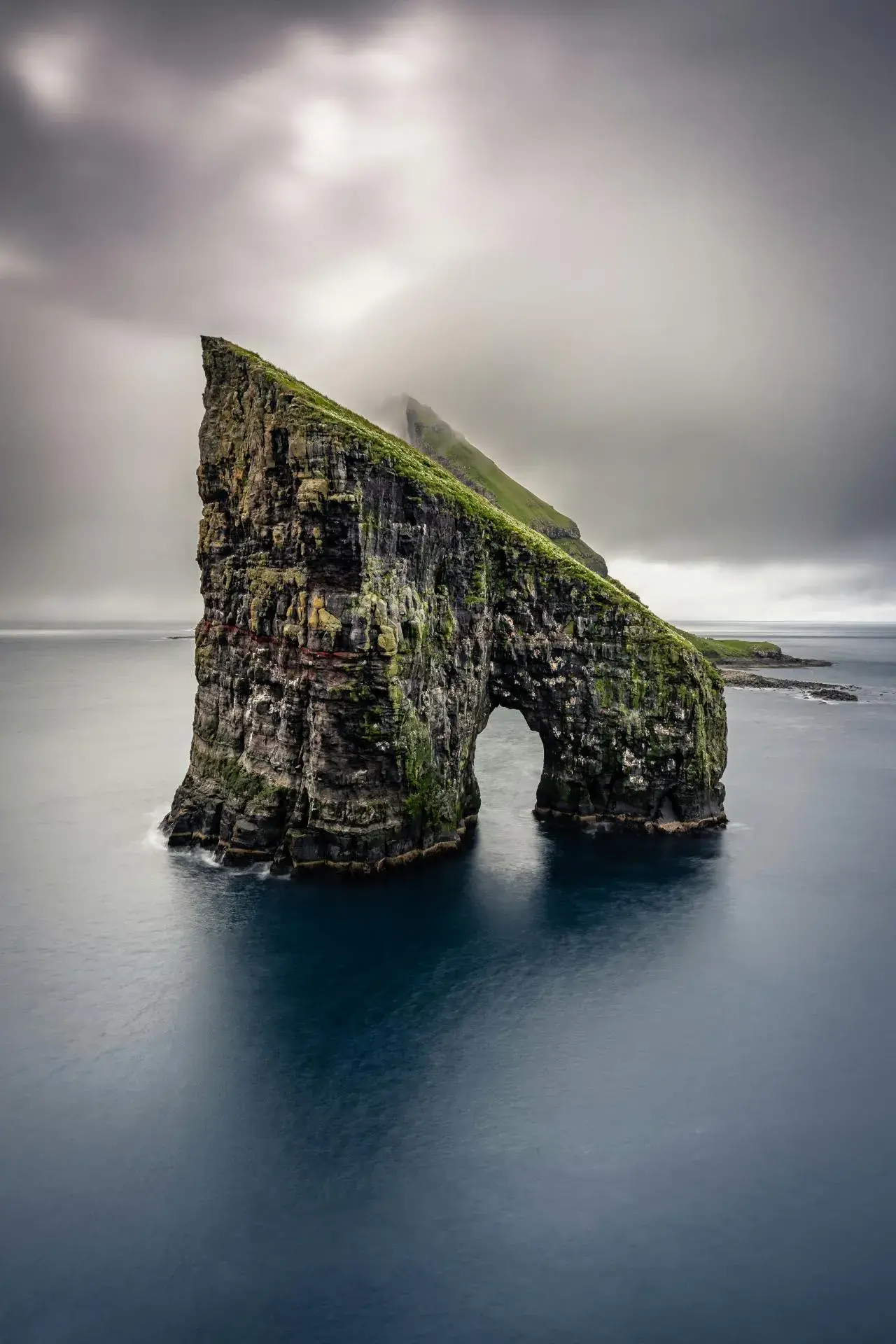
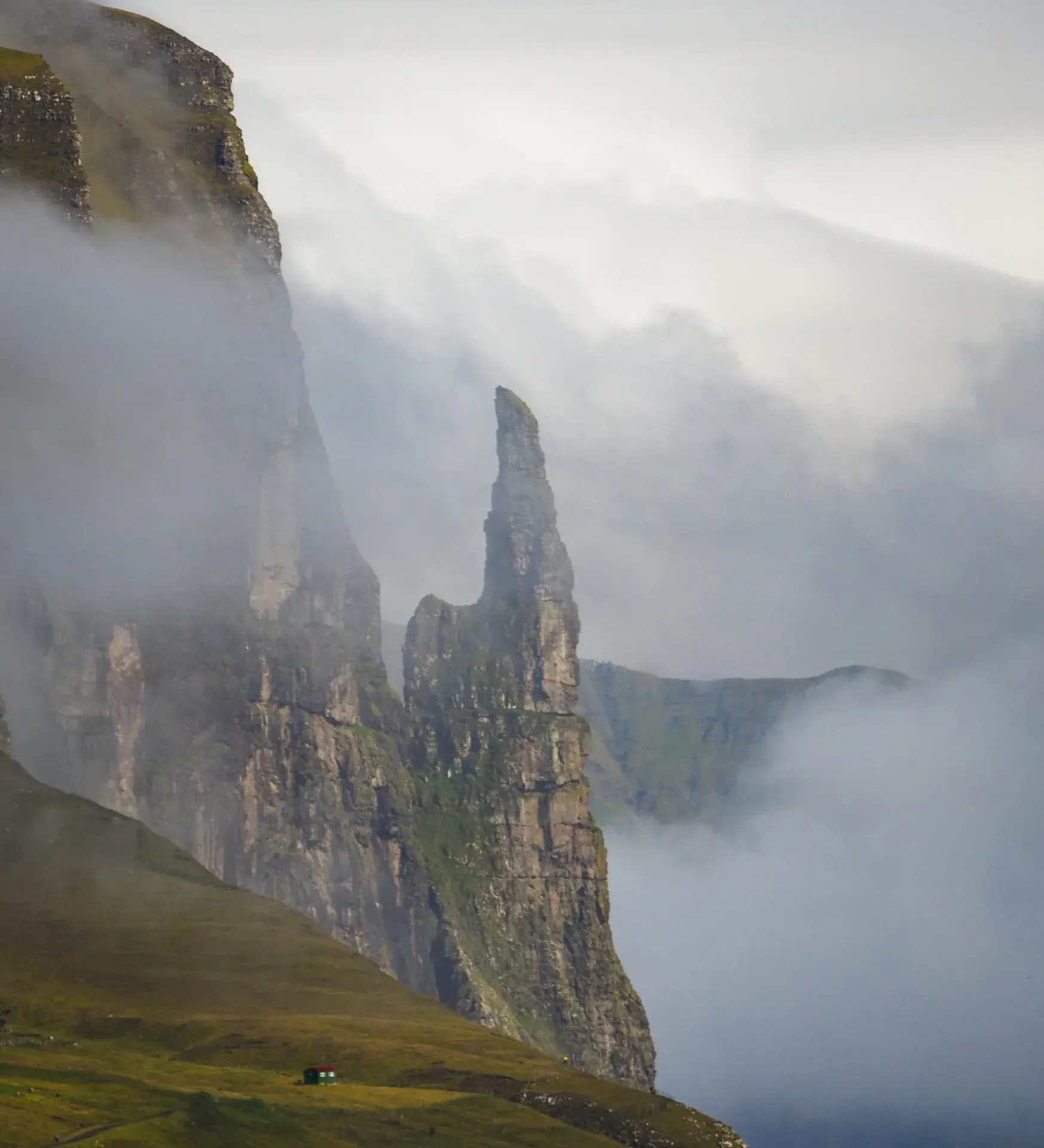
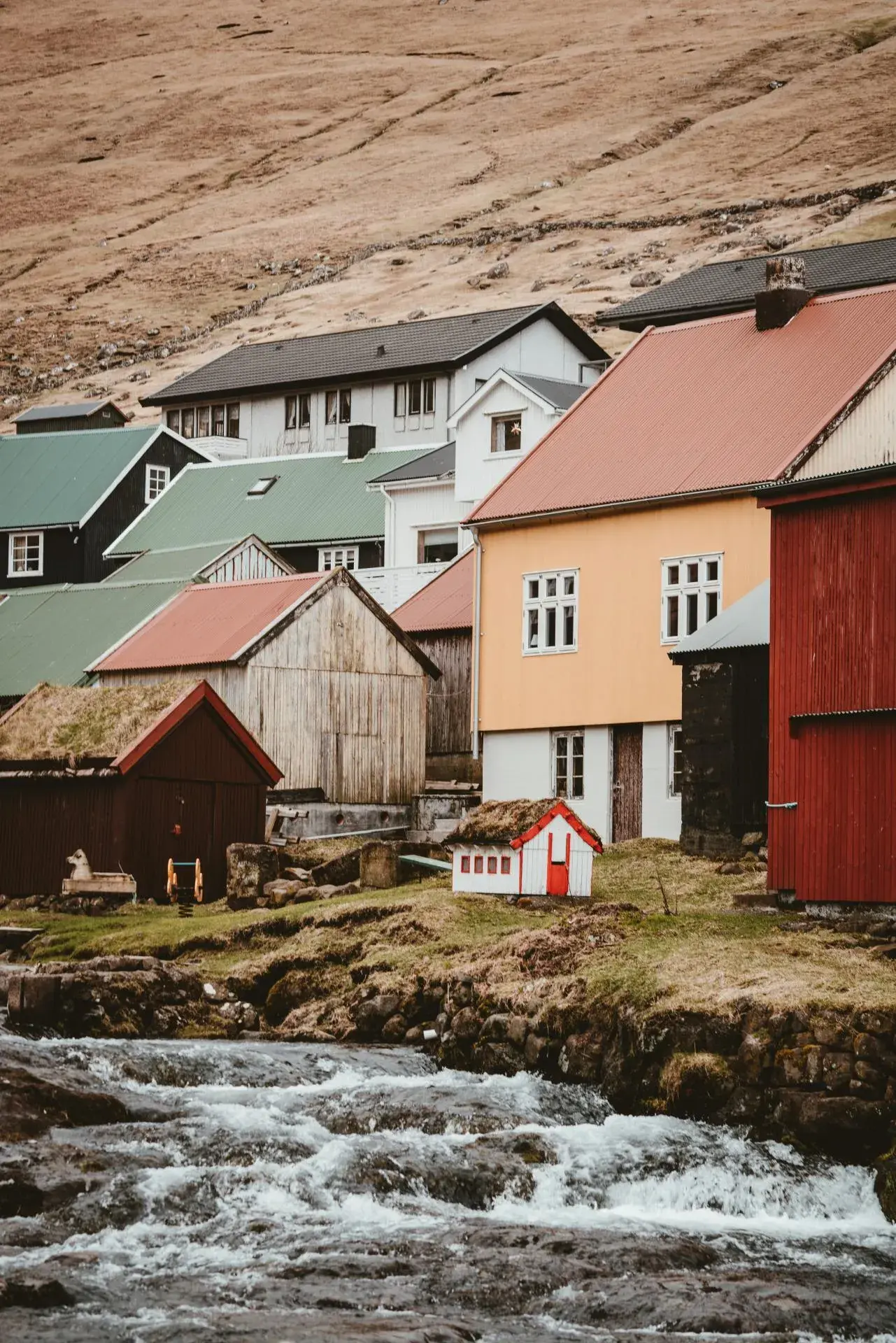
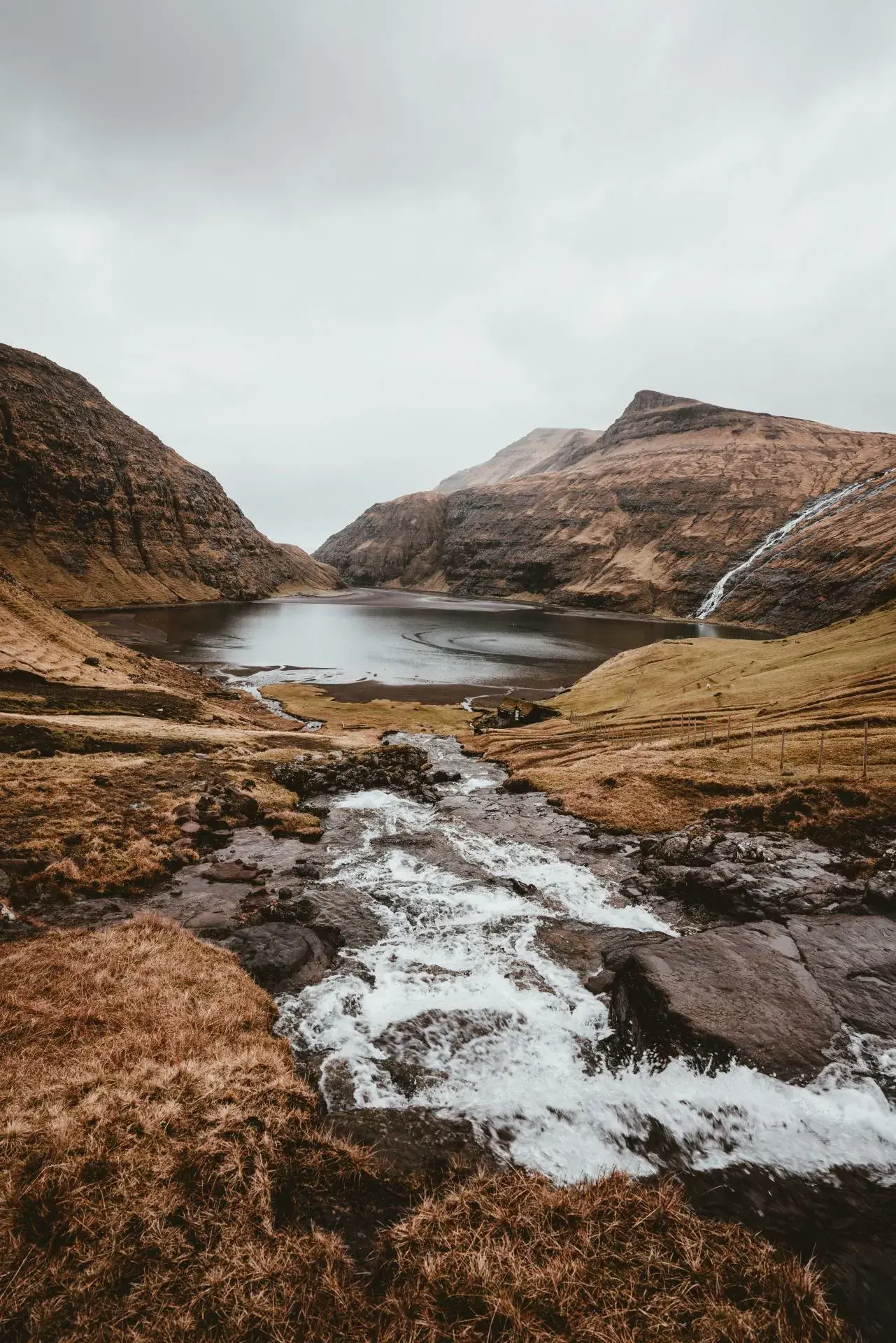
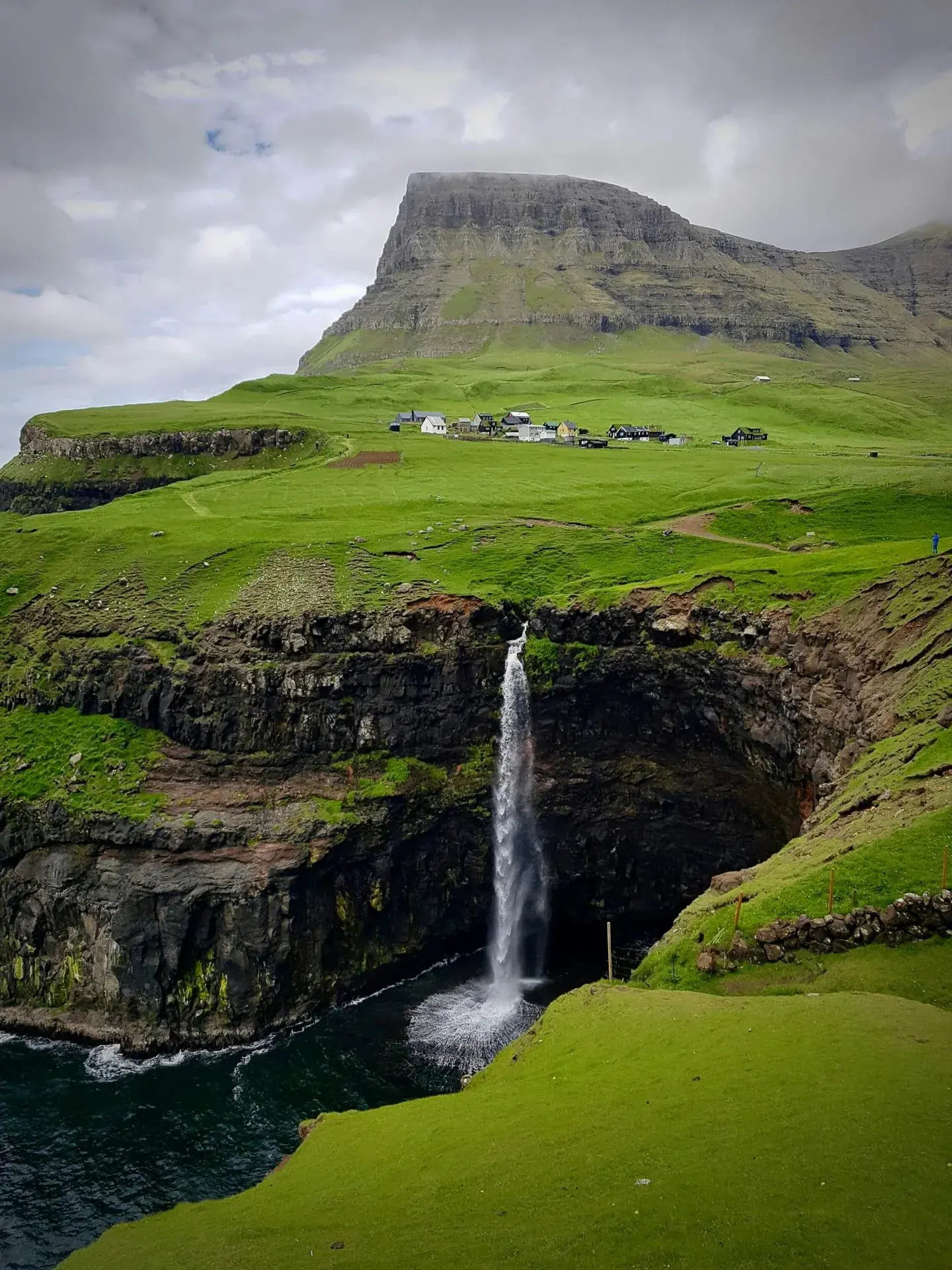
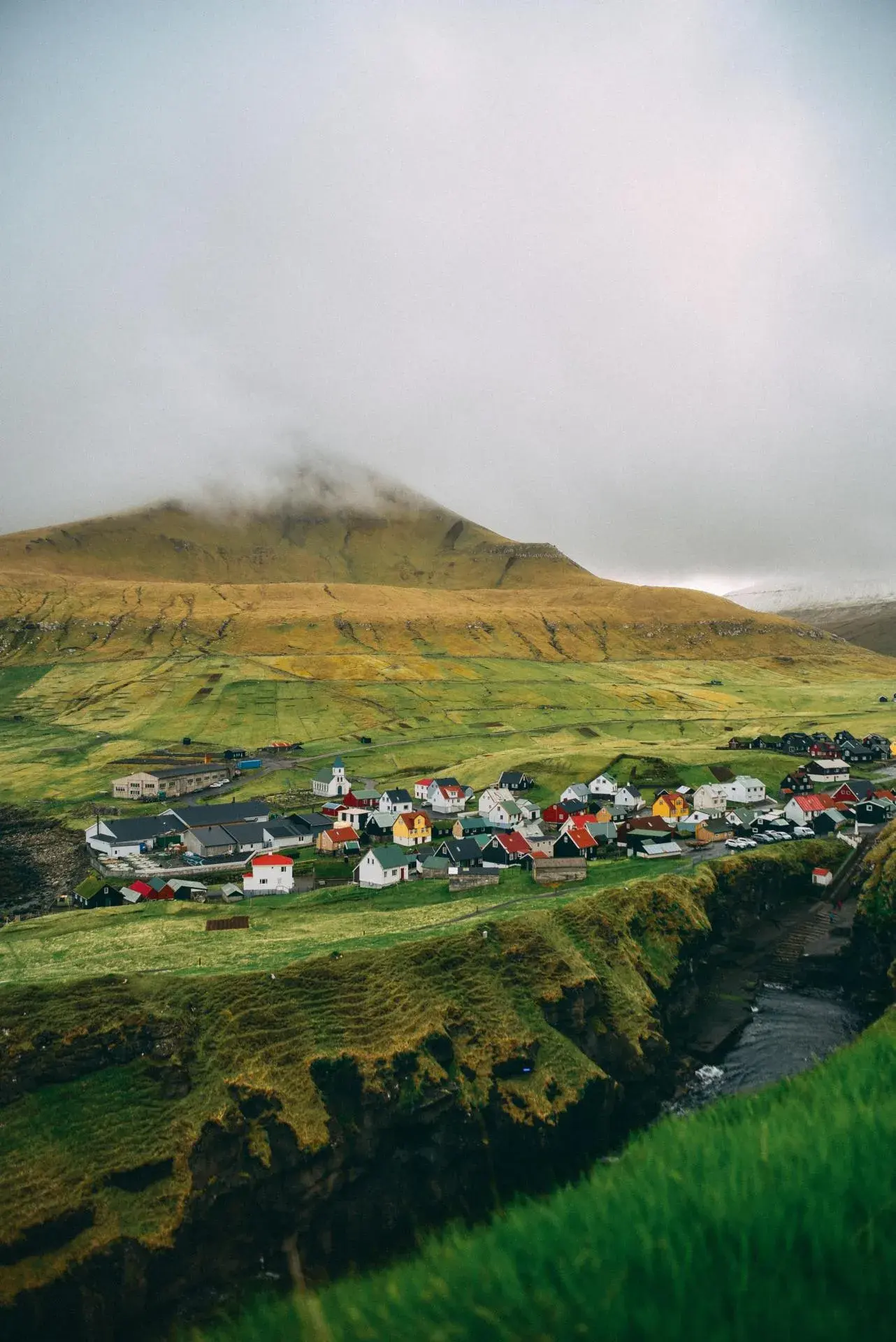
A land of sharp edges and striking forms, where wind-carved cliffs rise above the sea and waterfalls spill through winding streams toward small villages nestled into green hillsides.
Overview
The Faroe Islands are a remote North Atlantic archipelago, located between Iceland and Norway, with a history shaped by Viking settlement and centuries of connection to the Kingdom of Denmark. Today, they are a self-governing territory within the Danish realm, with a strong cultural identity rooted in seafaring traditions, language, and a close relationship with nature.
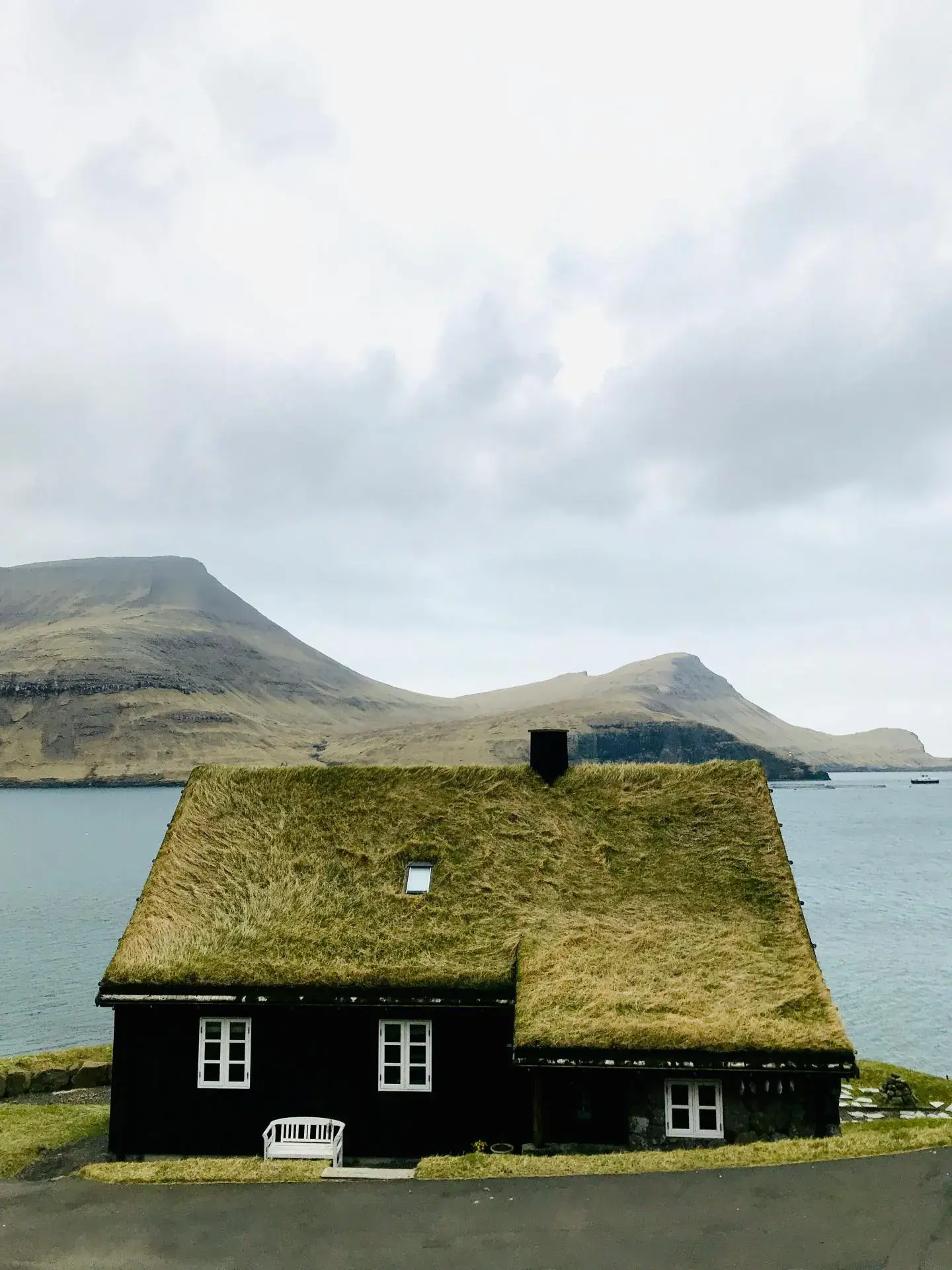
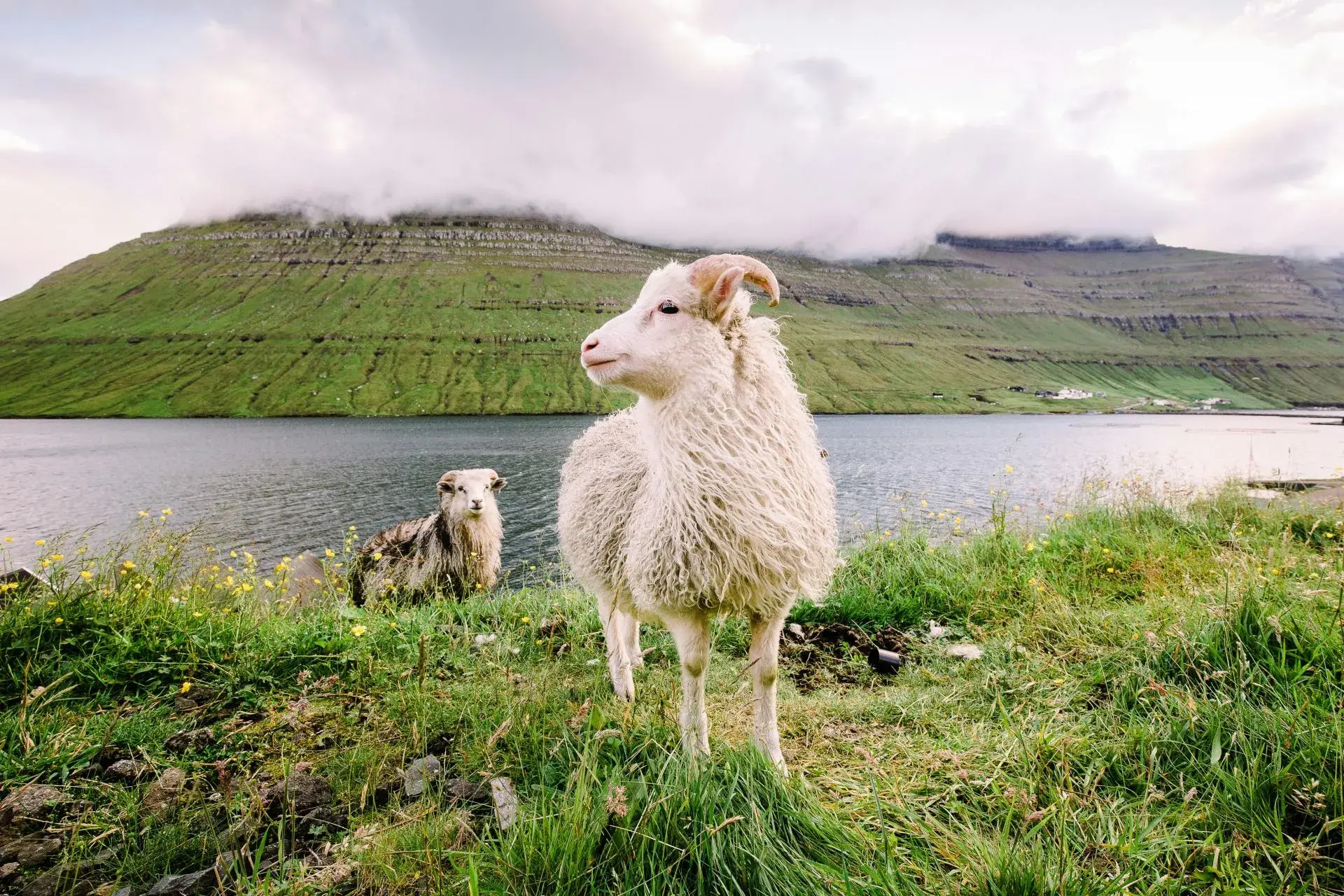
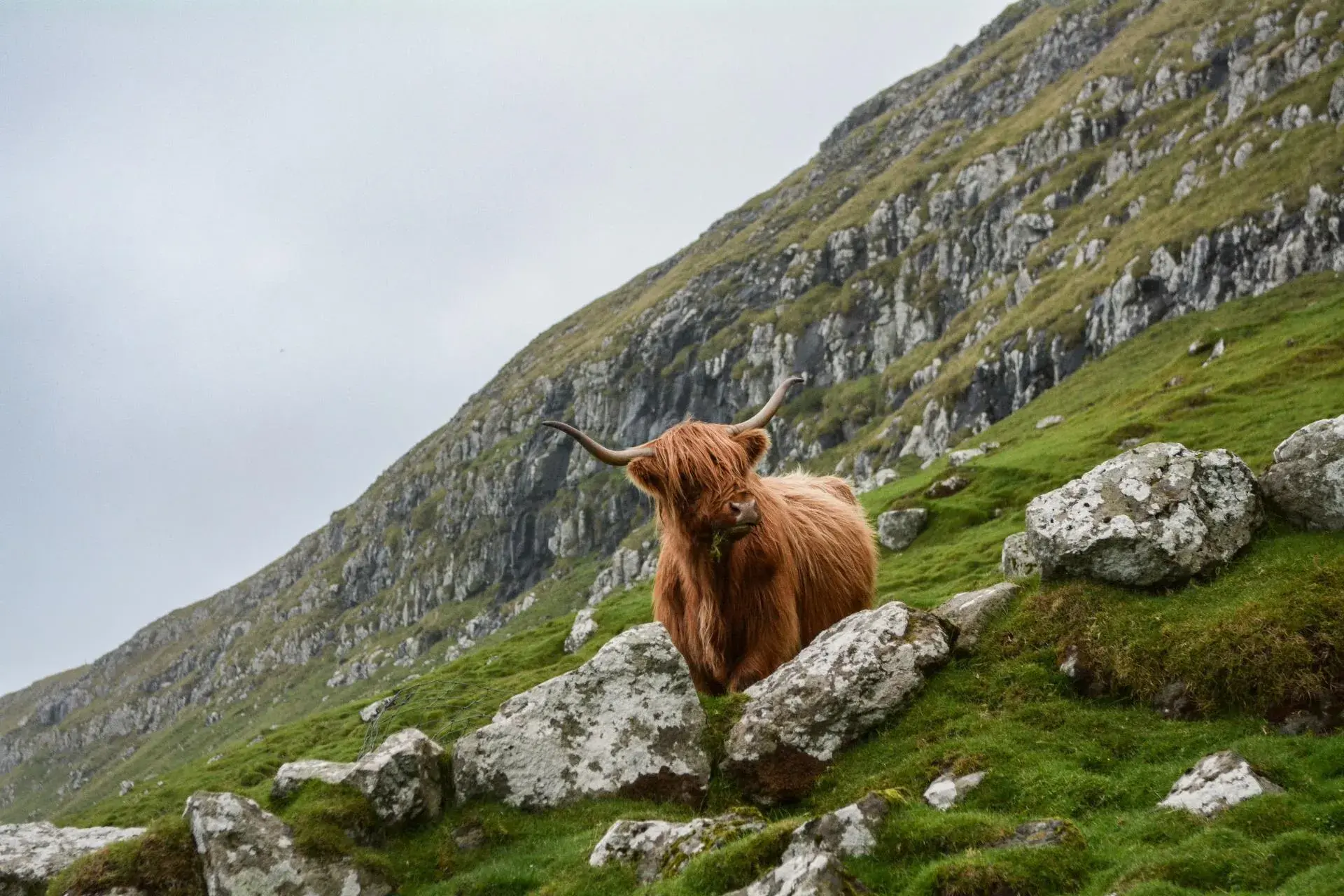
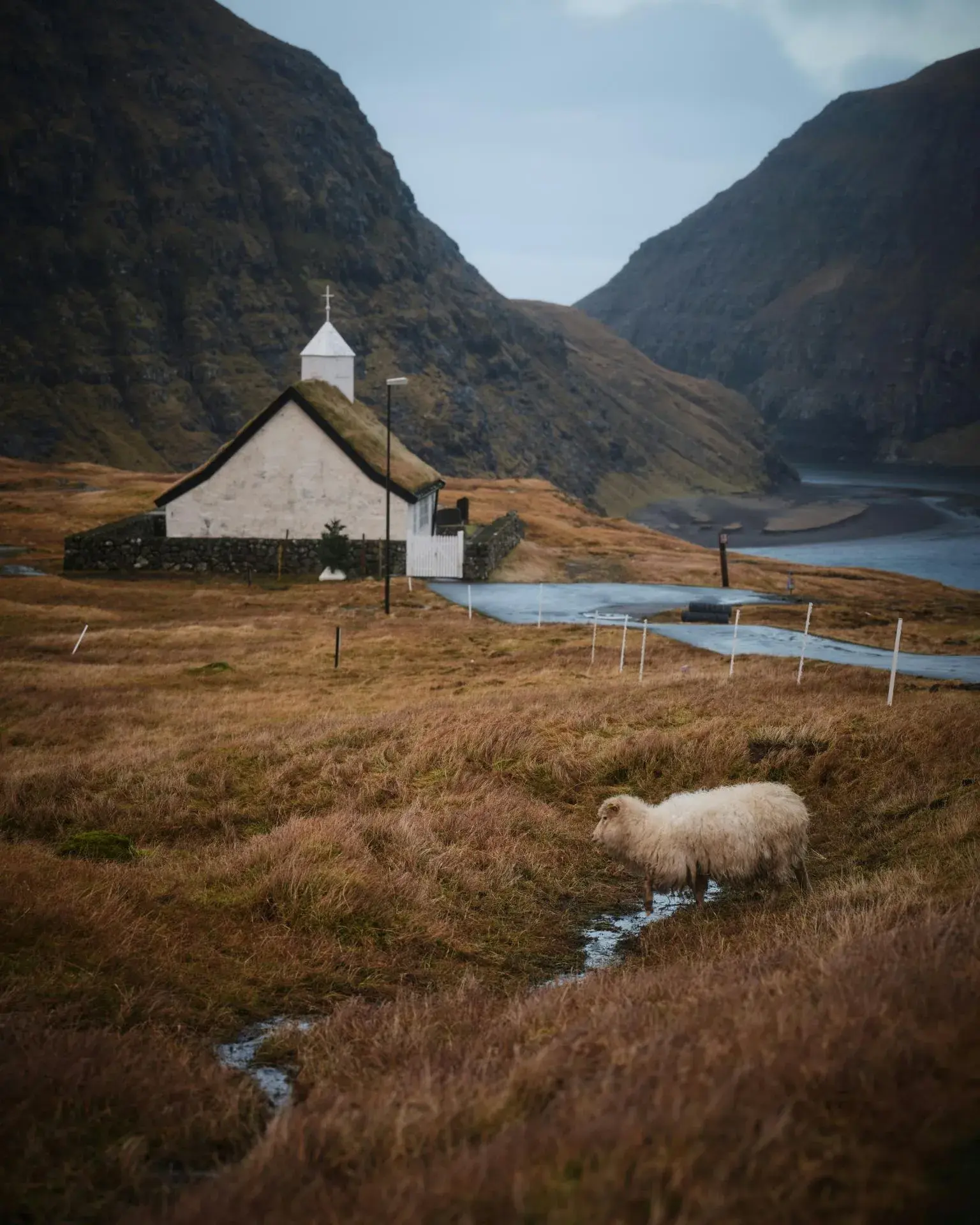
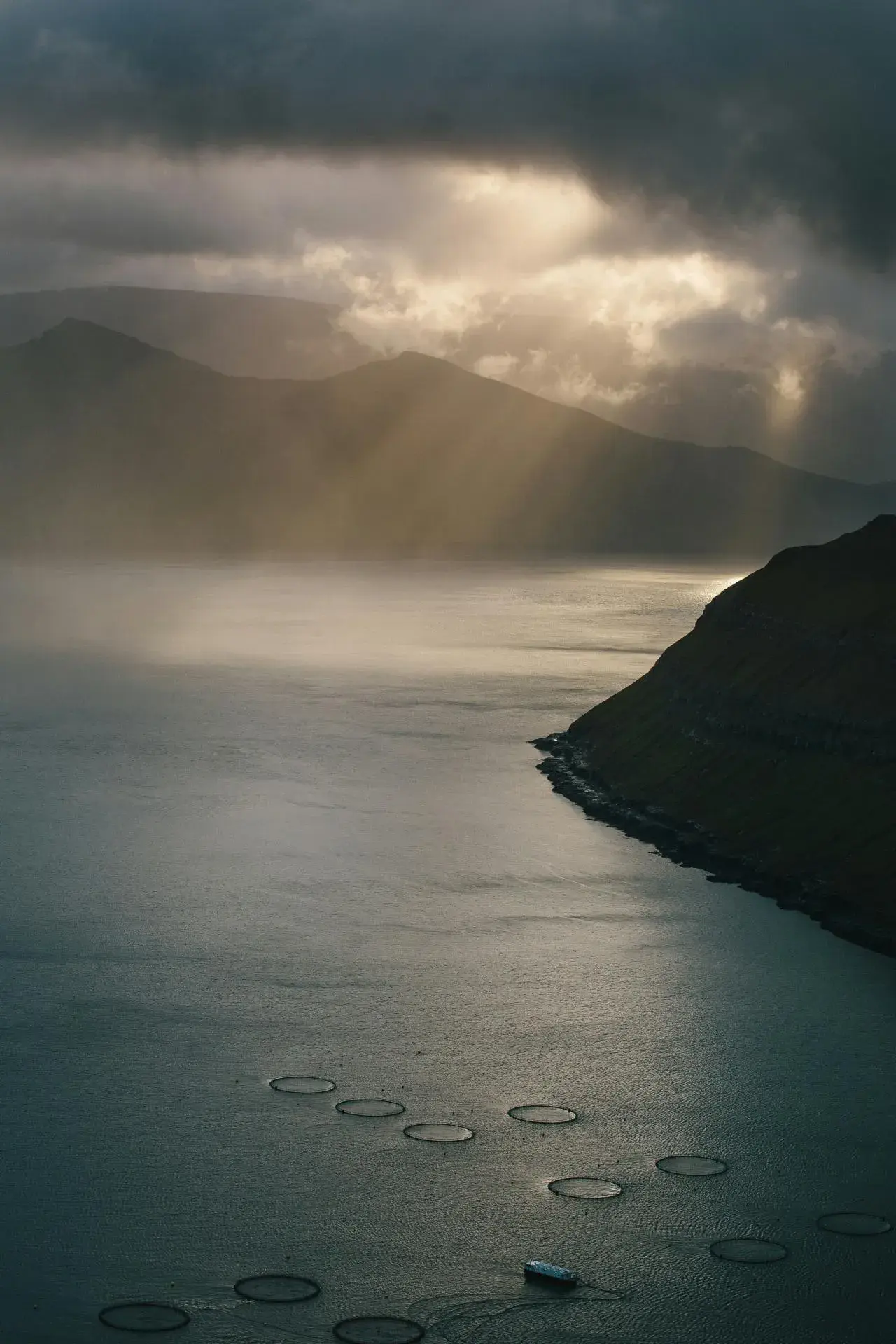
The landscape is defined by steep cliffs, rolling green hills, and narrow fjords that cut deep into the land. Small villages sit along the coastline, often connected by tunnels and scenic roads, while waterfalls drop directly into the ocean. The weather is changeable and atmospheric, adding to the sense of isolation and raw beauty.
The Faroe Islands offer a quiet, nature-driven experience, where the focus is on dramatic scenery, birdlife, and a rhythm of life shaped by the sea.
Total land area is 538 sq miles, or slightly larger than Hong Kong
None
Danish (Official), Faroese (most common), English
Suggested Journeys
Featured Properties
When to Travel
In the middle of the North Atlantic, where the warm waters of the Gulf Stream meet the cold waters of the Arctic, injecting the oceans with their global energy – lie the Faroe Islands, a nation of 50,000 people living at the very heart of the global climate and weather machine.
The Faroese fondly refer to their own country as “the land of maybe” because of its extreme and often unpredictable weather changes.
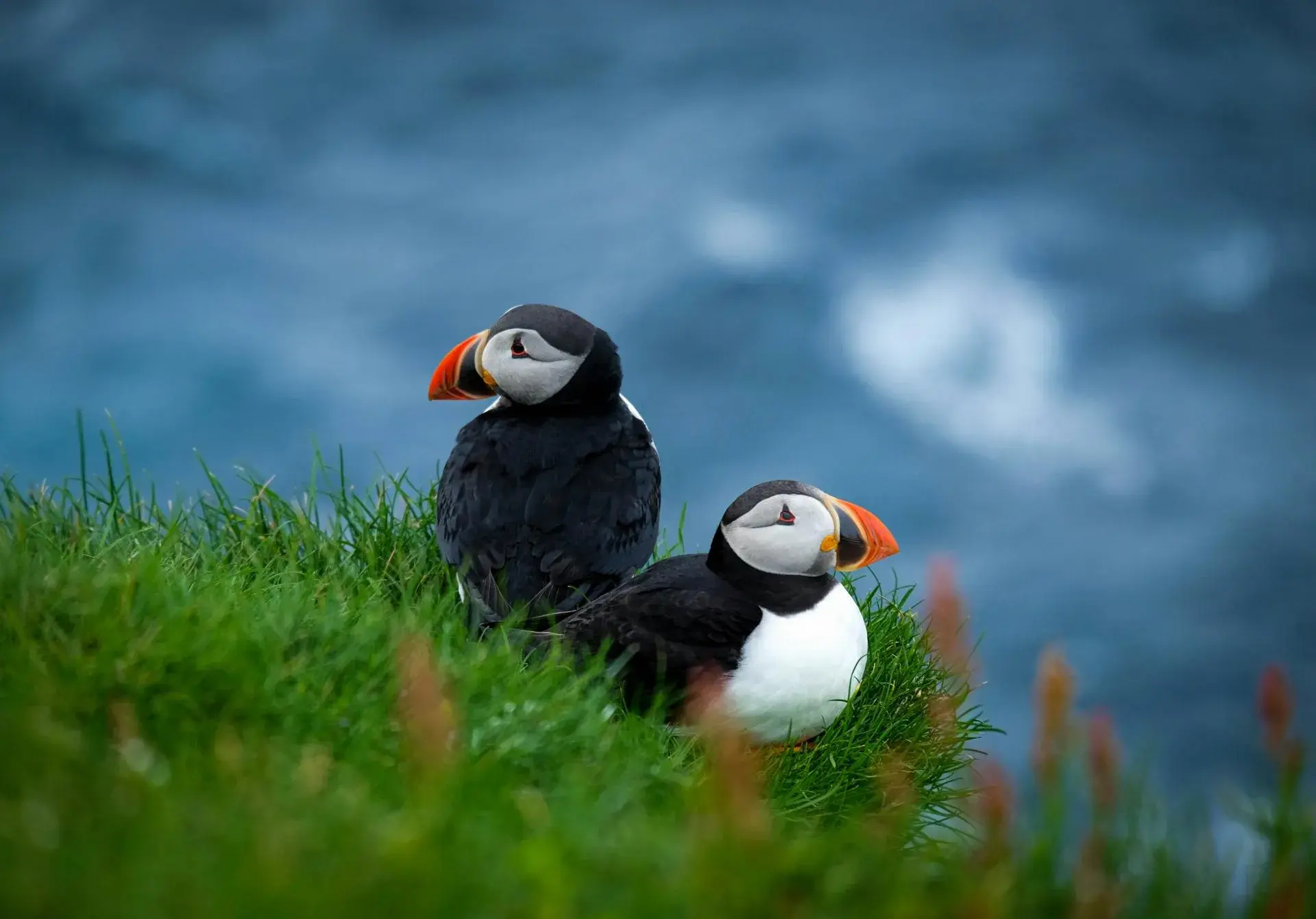
The weather in the Faroe Islands is mostly cold and humid year-round and while each season brings a different variety experiences, the best time to time to visit the islands is between May to September. Long days are perfect for explorations and in the late spring and early summer the wildflowers and Puffins are in abundance.
July and August are within the Peak Season and therefore a very advanced booking is strongly suggested.
December through February is usually extremely cold, but is the time when the northern lights would be visible.
Travel highlights
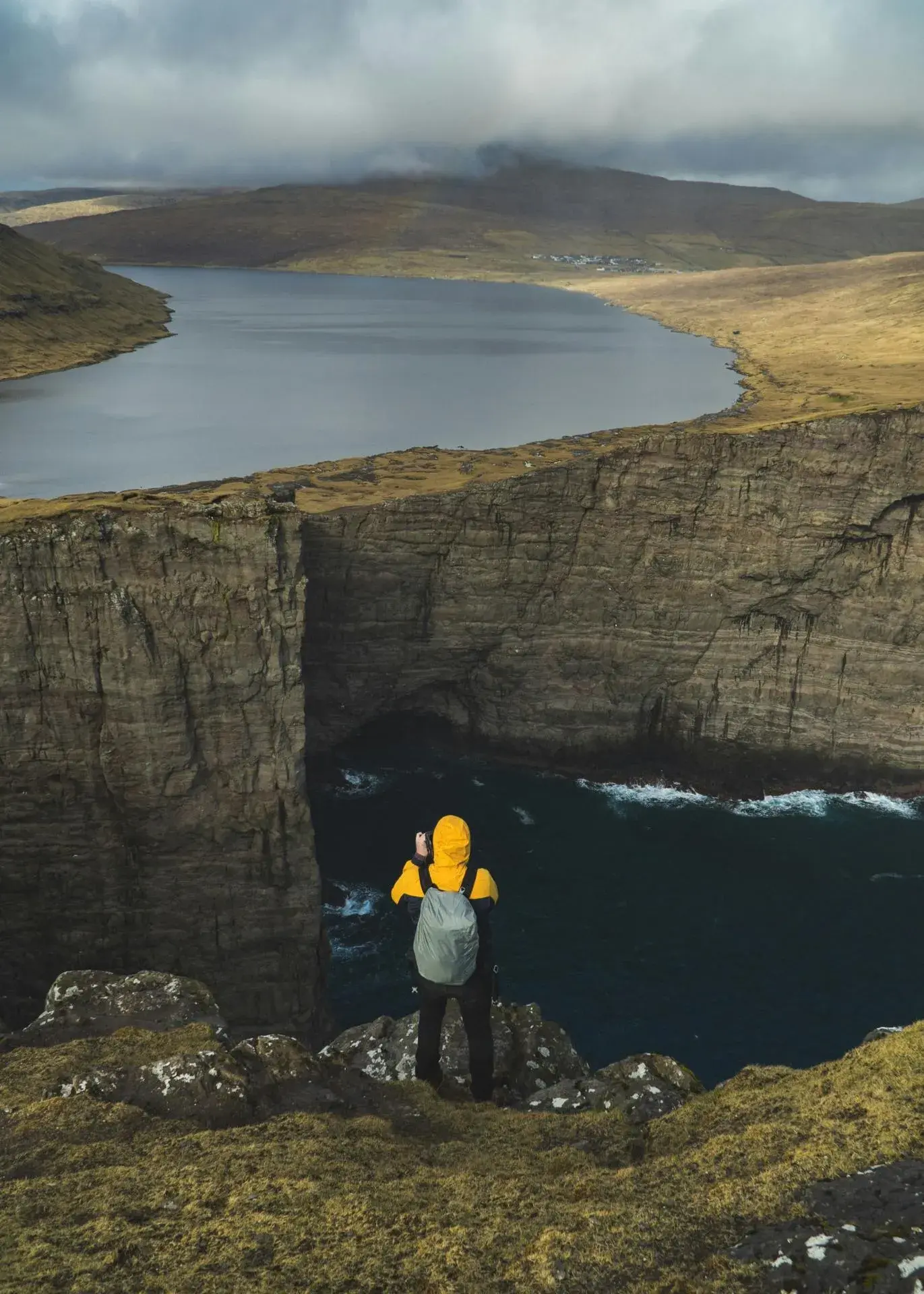
Across the Faroe Islands, steep cliffs rise from the Atlantic as waterfalls drop directly into the sea and narrow fjords cut through green hills. In places like Sørvágsvatn, the landscape plays with perspective, while remote villages such as Gjógv sit quietly along rugged coastlines. On Mykines, seabirds gather along windswept cliffs, adding life to the stark scenery. The shifting weather and light create constant variation, shaping a destination defined by raw nature, isolation, and a strong connection between land, sea, and sky.
Things to consider
-
The Faroe Islands have a cool, windy, and changeable climate, so layering is essential. Waterproof and windproof outerwear is key, along with warm layers such as sweaters or fleece. Even in summer, temperatures are cool, so a jacket is always needed. Sturdy waterproof shoes are recommended for walking on uneven and often wet terrain.
-
No special vaccinations are required. Routine vaccinations should be up to date.
-
The currency is the Faroese Króna, which is pegged to the Danish Krone (DKK). Credit cards are widely accepted, even in small towns, and ATMs are available in main villages and towns.
-
The Faroe Islands are very safe, with extremely low crime rates. The main considerations are related to nature, including strong winds, steep cliffs, and rapidly changing weather conditions. Following local guidance and staying on marked paths is important.
-
Tap water is safe to drink and of very high quality. Food is fresh and locally sourced, with a strong focus on seafood, lamb, and traditional Nordic cuisine.
Entry requirements:
US and Canadian citizens must have a passport valid for the duration of their stay. No visa is required for tourist visits of up to 90 days. Although the Faroe Islands are part of the Kingdom of Denmark, they are not part of the Schengen Area, so entry rules are separate. Travelers entering from mainland Denmark may still undergo document checks. Proof of onward or return travel may be requested.